Entry 48: Fire and Water - Focu e Aqqua
Location: Calabria
Date: 1933 to late 1950s
The Moschilla cottage had no fridge, no stove, no washing machine, no electric lights. Their home lacked these luxuries because it wasn’t connected to electricity. Adding to this list, there was also no bathroom, no flushing toilet and no hot or cold taps with flowing water - the house had no plumbing. Given these conditions, it is no exaggeration to state: Salvatore Moschilla, Concetta Trimboli and their eight children would not have survived life in Siderno without either FIRE or fresh WATER - which they accessed directly from the surrounding natural environment.
The need for water to sustain life is obvious and needs no further explanation. On an almost daily basis, this essential resource was collected from a public fountain and transported in a couple of large 40 litre barrels, balanced on either side of a donkey. Once home, the water from the barrels was siphoned into various ceramic urns, and placed in the kitchen for use throughout the day. Smaller volumes of water, which could be carried by hand, were sourced from nearby streams.
Surprisingly, the second element - “fire”, took priority over food. The reasoning was quite logical. You might have vegetables growing in the garden and a cupboard full of ingredients, but without the ability to light a fire, how would you cook your staple diet of chickpeas, beans or lentils? How would you boil water for the pasta or bake your loaves of bread? A popular saying, often repeated by Concetta, emphasized the likely outcome:
“Those with fire - lived. Those with food - died.”
Quite bluntly, without fire – you were doomed.
Furthermore, during the chilly winter season, fire was crucial for the additional benefit of heating the room. A plentiful stack of firewood guaranteed she could keep the fire burning and thereby, keep her family warm and safe. When Concetta’s children complained of the cold, she repeated the familiar saying and told them to add a few more logs to the fire:
"Cotrari, chillu cu focu – campau. Chillu cu mangiari – moriu. Vai menti dui ligna supa u focu.”
In Concetta and Salvatore’s kitchen the fire was lit, early every morning, on what was known as the ‘focularu’. This was nothing more than a hearth, built on the floor in the corner of the room. From breakfast through to dinner, this area was used to heat water and prepare meals, all cooked on open flames. Therefore, to ensure a steady supply of raw materials in relation to “fire” and “water”, every family member, regardless of age, was expected to help out. Concetta constantly juggled the tasks among her children; the chores were continuous and repetitive. These simple tasks may seem menial, but they clearly served a serious purpose.
Today, ‘a vuci da Cuncia’ - Concetta's voice from the past, echoes through time, giving us a narrow glimpse into their life through the chores she assigned to each son and daughter.

EXTRA INFORMATION 1
Written in English with Calabrese translation

EXTRA INFORMATION 2
The ‘focularu’ didn’t have a chimney, and sometimes excess smoke in the kitchen became an issue, especially when the wood being burnt wasn’t completely dry. When this happened, a roof tile was pushed aside to create an opening for the smoke to escape. This was done from inside the kitchen using a long stick known as ‘nu bastuni’. After the smoke cleared, the stick was used again to slide the roof tile back to its original position.
EXTRA INFORMATION 3
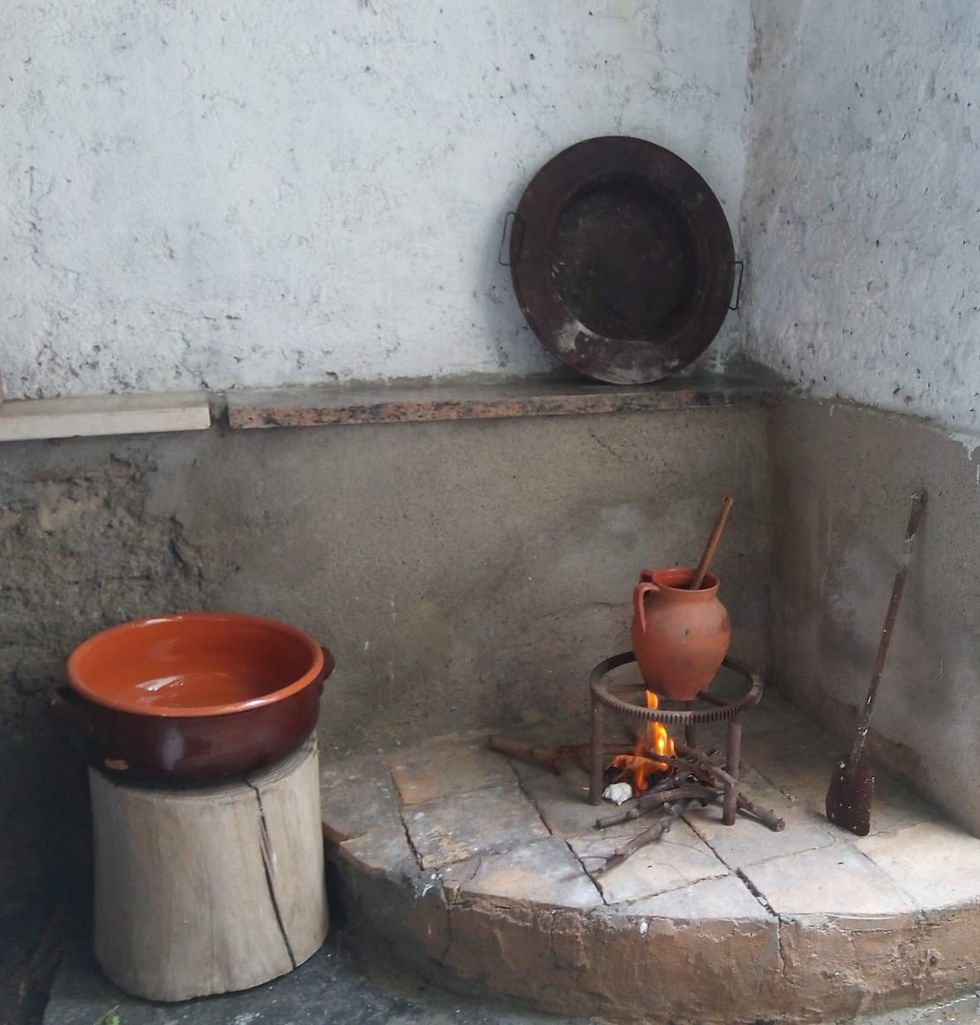
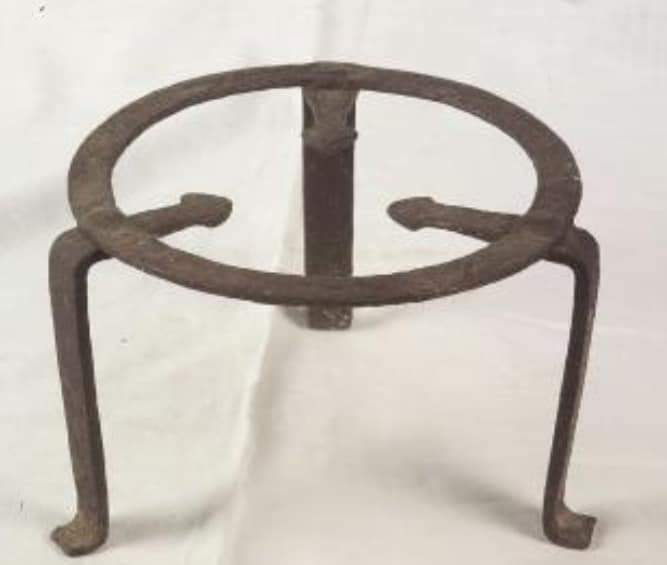
During cooking, pots of food were supported on an iron stand called a ‘tripodi’. The 'tripodi' was placed directly above the fire.
EXTRA INFORMATION 4
Often, several tripods of varying sizes were placed on the 'focularu', holding pots for cooking food and heating water.
EXTRA INFORMATION 5
The photograph below shows Concetta's brother, Michele Trimboli, using a young donkey to transport small barrels of water.


Comments